
The Johns Creek City Directory Shelf by Collection
Fulton Library Central Special Collections holds the strongest verified directory sequence for this area. Because Johns Creek was incorporated long after most alphabetical publication, coverage must be tested by year, suburb, street, postal label and community name.
| Collection | Years | Where held | Access |
|---|---|---|---|
| Atlanta City and Suburban Directories | 1859-1860 through 1991; 1867 Atlanta volume noted | Central Special Collections | Walk-in; check suburb and year coverage |
| Haines Criss-Cross Directories | 1946 through 2016-2017 | Central Special Collections | Walk-in, address and telephone sequence |
| Georgia census microfilm | 1820-1880 and 1900-1930 | Central Georgia Collection | Microfilm |
| Federal population census | Public through 1950 in 2026 | NARA, partners and library | Search images and indexes as available |
| Newspapers and local histories | Varies | Central Georgia Collection | Microfilm and books |
| Georgia maps | Late 1800s-2000s; Atlanta USGS 1927-1929 | Central Special Collections | Ask staff about maps and vertical files |
| Fulton deeds, probate and marriage | Series-dependent from county formation | County offices, archives and cataloged film | Index/image access varies |
No verified Johns Creek-specific Sanborn sheet was found. That gap should be stated, not filled by assuming a nearby town sheet covers a rural site.
A Johns Creek City Directory Spans Two Long Runs
The numerical arc is unusual: alphabetical city and suburban directories begin in 1859-1860 and stop in 1991, while Haines address-first books run from 1946 through 2016-2017. Together they provide a long overlap, but neither creates a seamless Johns Creek resident list.
Verified alphabetical collection begins.
Haines criss-cross coverage begins.
Alphabetical publication ceases during the region's suburban growth.
Johns Creek incorporates on December 1.
Verified Haines run ends.
This means printed alphabetical city directories ended fifteen years before incorporation. The address-first series crossed that municipal turning point and is often more useful for modern subdivisions.
Read a Johns Creek City Directory Entry Field by Field
An alphabetical Atlanta-area entry can compress identity, family and address clues into a short line. Publisher rules differ, so always photograph or transcribe the key from that volume before expanding its marks.
| Name | Surname and given name or initials |
|---|---|
| Spouse | May appear in parentheses |
| Widow notation | Often “wid” followed by a spouse's name |
| Work clue | Occupation, title, employer or business address may appear |
| Home clue | House number and street, sometimes marked “h” |
| Boarding clue | “bds” or a similar publisher abbreviation |
| Street section | Numeric address order, intersections and named occupants or firms |
- Criss-cross directory
- An address-first or telephone-first book used to reverse a street location into a listed name.
- Householder index
- A publisher's resident-oriented index whose scope and marks must be read from that edition.
- Abbreviation key
- The front-matter guide that explains compressed terms and inclusion rules.
Absence may mean an unlisted phone, missed canvass, late move, rural route or an address outside that edition's geographic reach.
See Fulton City Directories at Their Official Source
The Fulton Library city directories page gives the verified runs and describes their address-level value.
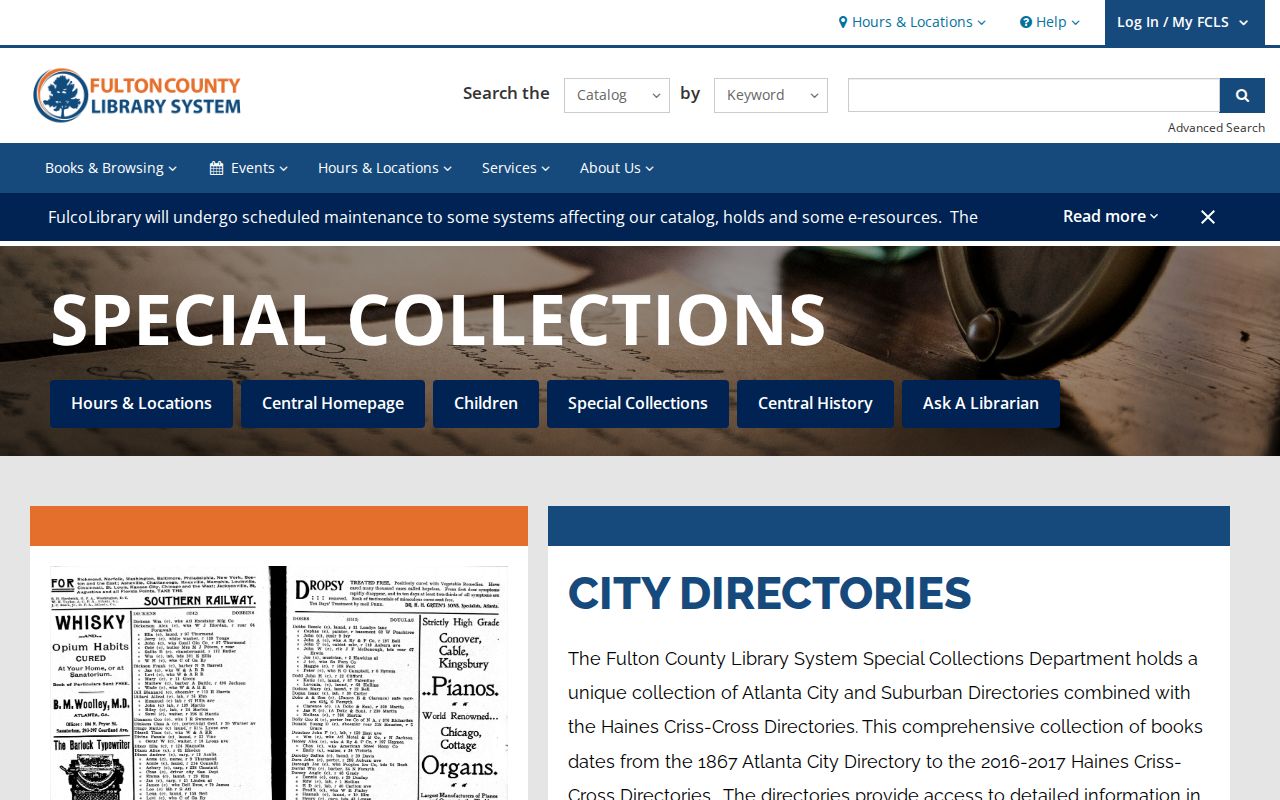
The saved page shows where the collection is documented, while the live source should be checked for current access details. These volumes can also reveal street-name changes across Atlanta, Fulton County and the metro area.
Plan a Johns Creek Research Visit Through Central Library
Central Special Collections, rather than a neighborhood shelf, is the main historical destination. Its holdings include Georgia and genealogy materials, library archives, rare books, maps, microforms and city directories. Staff recommend emailing Library.SpecColl@fultoncountyga.gov before a focused visit, though the directory volumes are available for walk-in use.
The Special Collections overview is represented in this capture.
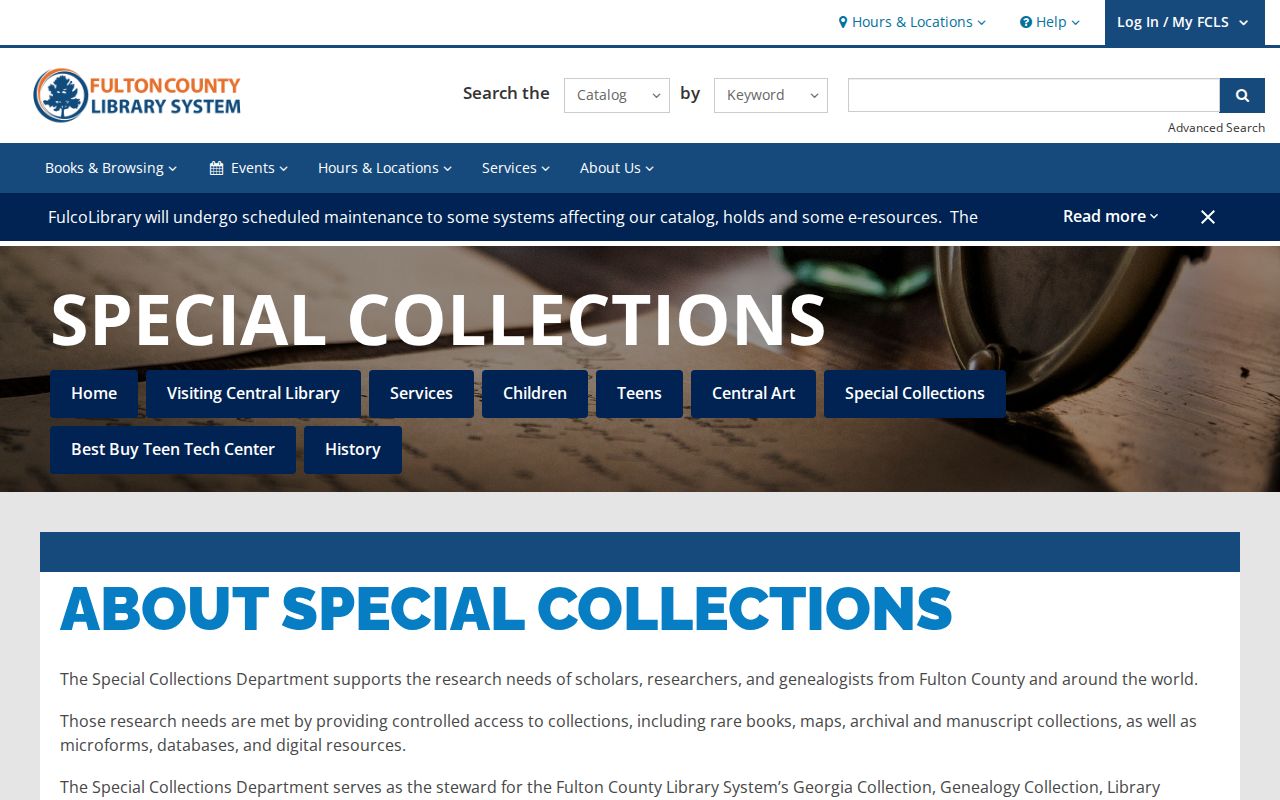
Email ahead with the target person, address, likely years and older place names. Ask about maps, newspapers, microfilm, vertical files and whether an edition actually covers the relevant suburb.
Use Johns Creek Branches as a Referral Point
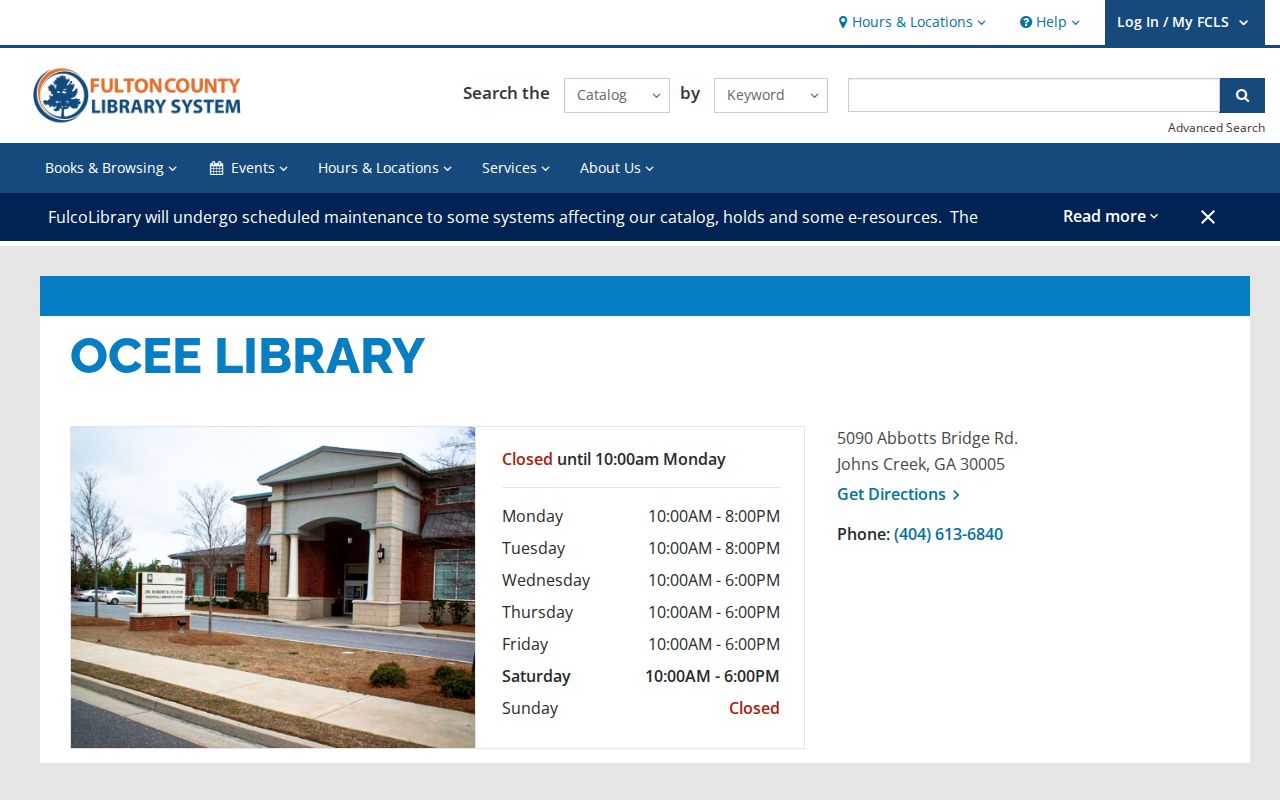
Johns Creek has two Fulton Library branches: Ocee Library at 5090 Abbotts Bridge Road, Johns Creek 30005, phone 404-613-6840, and Northeast/Spruill Oaks at 9560 Spruill Road, Johns Creek 30022, phone 404-613-7300. Published system hours in the research are Monday and Tuesday 10 a.m. to 8 p.m., and Wednesday through Saturday 10 a.m. to 6 p.m.; confirm them before travel.
The Ocee Library page appears in this saved image.
Branch staff can help with referrals and current library databases, but subscription access changes. Do not assume that a named genealogy or newspaper product is available remotely until staff confirms it.
Search Older Community Names Before “Johns Creek”
Johns Creek's municipal history starts in 2006, while its land and families are far older. Directory searches may need Ocee, Newtown, Shakerag, Warsaw, Alpharetta, Duluth, Suwanee, a subdivision, or a rural-route form. Postal city, incorporated city and legal description can all describe the same general area in different ways.
Use a three-name address test. Try today's Johns Creek form, the preferred postal city form and the older community or subdivision label. Then tie each candidate to the same Fulton parcel or legal description. This guards against false matches near the Chattahoochee and the city's Fulton, Forsyth and Gwinnett edges.
Trace a Johns Creek Household Edition by Edition
A city directory becomes more reliable when treated as a sequence rather than a single hit. Record the entry exactly, including initials and abbreviations, so later changes remain visible.
- Begin with a known year, name or address and transcribe the full entry.
- Check the nearest earlier and later editions; note moves, spouse names and changed initials.
- After 1946, switch to the Haines street sequence to test the address from the reverse direction.
- At a census year, connect the directory address to the enumeration district and household schedule.
- Use deeds to test ownership, permits to date changes, and probate, obituaries or newspapers to close a life event.
Public census access follows the federal 72-year rule, so the newest open population census in 2026 is 1950. The library also states Georgia census microfilm holdings for 1820-1880 and 1900-1930.
Separate the Listed Occupant From the Legal Owner
A city directory entry can name the person associated with an address in that edition, but it need not establish title. Conversely, a deed or assessor card identifies an owner but not each resident. Compare the two tracks before drawing a family or house-history conclusion.
The modern address-record chain belongs on the Johns Creek street directory page. For historical work, use its parcel and deed details only as anchors that stabilize older spellings, routes and lot descriptions.
Fill Johns Creek Directory Gaps With Companion Sources
When an edition is missing or silent, use sources that answer a narrower question. Newspapers and obituaries can supply dates and relationships; probate can identify an estate representative or heirs; school yearbooks can aid classmate research; church, veteran and organization archives may hold historical rosters with repository permission. Do not reproduce current private membership lists.
Georgia Archives catalogs county and state material, and its official site is shown here.
Search archive and university catalogs with older community names, not only “Johns Creek.” Treat user-contributed memorials as leads and confirm them with marker images, church registers, official death records, probate or newspapers.
Preview a Digitized Fulton Volume
Digitized Atlanta scans help researchers learn how editions arrange surnames, streets, and abbreviation keys. The digitized directory search is represented below.
Online scans are leads, not proof that every suburb, year, or page is present. Confirm the title page, date, publisher rules, and geographic scope. Take an incomplete title and year to Central Special Collections for a physical-volume check.