
Johns Creek Previous Residents Across the Record Eras
No single roll spans the full history of a local house. Fulton County deeds establish a chain of legal ownership, while library and census sources can name people associated with the address. The strongest result comes from overlapping sources and noting what each one can actually prove.
| Source | Years It Covers | Where Held | What It Shows |
|---|---|---|---|
| Deeds and indexes | Fulton series; online cutoff not officially stated | Fulton Clerk, GSCCCA, counter books and film | Grantors, grantees, transfers and legal descriptions |
| Haines criss-cross | 1946 through 2016-2017 | Central Library Special Collections | Listed occupants and telephone entries by address |
| Atlanta and suburban directories | 1859-1860 through 1991 collection range | Central Library Special Collections | Named residents or firms where coverage reaches the area |
| Federal census | Public through 1950; library film for stated Georgia runs | NARA and library resources | Household members, relationships and other schedule details |
| Permits and plats | Johns Creek city records from December 2006; older series vary | City Community Development and Fulton Clerk | Building changes, applicants, contractors, lots and blocks |
| Probate and obituaries | Event-dependent | Fulton Probate and newspaper collections | Decedents, representatives, heirs and survivors |
Start with the current parcel regardless of the target era because its parcel ID and legal description bridge changes in street names and postal labels. For a twentieth-century household, move quickly to Haines and census material. For an earlier tract, let deeds, plats, probate, maps, and older community names carry more of the trail.
Begin a Johns Creek Previous Residents Search With the Parcel
The Fulton County Board of Assessors Property Search is the practical starting point. Search the property address, then capture the parcel number, situs address, owner name, owner mailing address, legal or subdivision description, deed reference, exemptions, building facts, and map link. The situs is the taxed land; the mailing address is where notices go. Even when both addresses match and a homestead indicator appears, the card does not name every person in the household.
| Parcel field | Use in the backward trail |
|---|---|
| Parcel ID | Keeps the same property centered when its street label changes |
| Legal description | Matches the land across deeds, plats, lots and blocks |
| Deed reference | Points toward the current owner's acquisition instrument |
| Situs and mailing | Separates the land location from a tax-contact address |
| Homestead indicator | Offers dated owner-occupancy evidence, not a full household list |
A trust, corporation, estate, or distant mailing address is not a dead end. It is a prompt to inspect the deed and related filing while avoiding assumptions about who occupied the building.
Move Johns Creek Previous Residents Backward Through Deeds
A deed-index result is a locator, not the whole transaction. Capture county, grantor, grantee, instrument type, execution and recording dates, book and page or instrument number, image status, and every prior-deed cross-reference. The Fulton County Clerk supplies the official record path when an image or index detail is unavailable online. This is the legal-owner spine beneath a previous residents timeline.
The successful Clerk capture below marks that fallback route. It matters because the official material does not publish one dependable first year for Fulton online coverage.
Walk Past Owners Through the Fulton County Deed Chain
The backward method changes roles at every transfer. The seller in the current deed is searched as a buyer in an earlier period. Names guide the search, but the parcel's legal description decides whether two instruments concern the same land.
- Pull the current owner, parcel ID, full legal description, subdivision, lot, block, and deed reference from the assessor card.
- Find that owner's acquisition deed and record the grantee, grantor, dates, instrument number, and any prior-deed reference.
- Search the seller as a grantee in an earlier date range, then match the legal description rather than relying on the name.
- Repeat the role switch. Treat security deeds as financing and quitclaims as possible title adjustments, not automatic market sales.
- When GSCCCA images or indexes stop, use the Real Estate Division terminal, bound books, grantor-grantee indexes, Georgia Archives, or cataloged film.
- Grantor / grantee
- The grantor gives or transfers an interest; the grantee receives it.
- Chain of title
- The linked sequence of instruments that traces ownership of the same land over time.
- Legal description
- The recorded description of the land, often by lot, block, subdivision, plat, or metes and bounds. It is more stable than a street label.
Continue Johns Creek Previous Residents Research at the Clerk
The GSCCCA search menu covers real-estate indexes and offers premium PT-61 address, map, daily, and instrument tools. Account or payment rules can affect image access. A free courthouse terminal, however, is a documented alternative at the Superior Court clerk's office.
The Fulton Real Estate Division is at 136 Pryor Street SW, Ground Floor, Atlanta, and lists customer service at 404-613-5313. Ask for the relevant grantor-grantee index, deed book, plat, or survey by known identifiers. Georgia Archives and FamilySearch catalog material can extend the search, although account, center, or affiliate-library limits may apply to some images.
Note: Do not invent an online cutoff year; document the last result found and the next counter or film source checked.
Test Three Address Names for Johns Creek Previous Residents
Johns Creek became a city on December 1, 2006, but the land trail is much older. Search the modern Johns Creek form, the preferred postal form tied to Alpharetta, Duluth, or Suwanee, and an older community or subdivision label such as Ocee, Newtown, Shakerag, or Warsaw. Rural routes, lots, blocks, and plats may replace a modern street entirely.
Anchor each spelling or place-name variant to the same parcel and legal description. That discipline prevents a postal change from looking like a break among previous residents. It also explains why pre-incorporation permits and administrative records usually belong with Fulton County rather than a City of Johns Creek office.
Pair Johns Creek Previous Residents With Census Schedules
Ownership and occupancy are different questions. Haines criss-cross volumes at Central Library Special Collections run from 1946 through 2016-2017 and work from an address toward a listed occupant or telephone entry. The library's broader Atlanta and suburban directory collection spans 1859-1860 through 1991, though geographic coverage must be checked by year.
- Start with a known address and record the directory entry exactly, including abbreviations and the edition year.
- Check the next earlier and later editions to bracket when a listed occupant appears or disappears.
- At a census year, identify the correct enumeration district and inspect the household schedule.
- Compare names, relationships, ages, and address details without treating a directory omission as proof of absence.
- Return to deeds, permits, newspapers, or probate to explain changes between the dated snapshots.
The full shelf and entry conventions belong on the Johns Creek city directory collections page. For this task, the volumes serve as dated overlays on the deed chain.
The 1950 Limit for Johns Creek Previous Residents
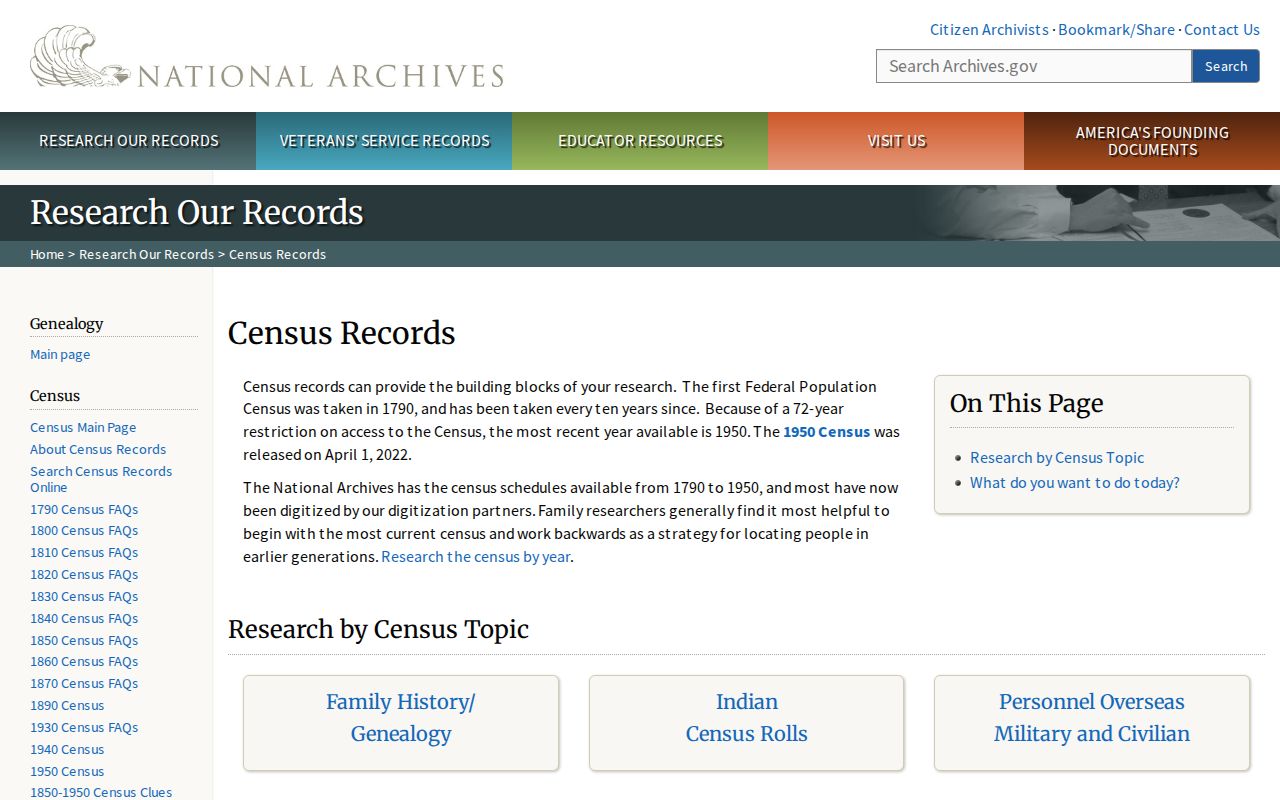
The newest open federal population census in 2026 is 1950 under the 72-year rule. The National Archives census guide explains the public-release framework and routes researchers to schedules and partner access.
This captured guide is useful at the point where a directory name needs household context.
Date Johns Creek House Changes With Permits and Plats
Permits can associate a project date, applicant, contractor, and inspection history with an address. Johns Creek municipal records begin with incorporation, so older work may require a narrow Fulton records request. A permit dates construction or alteration; it does not by itself identify previous residents.
Plats supply the stronger geographic bridge. The Fulton Clerk and Johns Creek residential plat lookup can connect a street address to a subdivision, lot, block, survey, and easements. No verified Johns Creek-specific Sanborn fire-insurance sheet was found, so a Sanborn-based building claim should not be made. Use available plats, maps, permits, and aerial context instead.
Close a Johns Creek Resident Trail With Vital and Estate Records
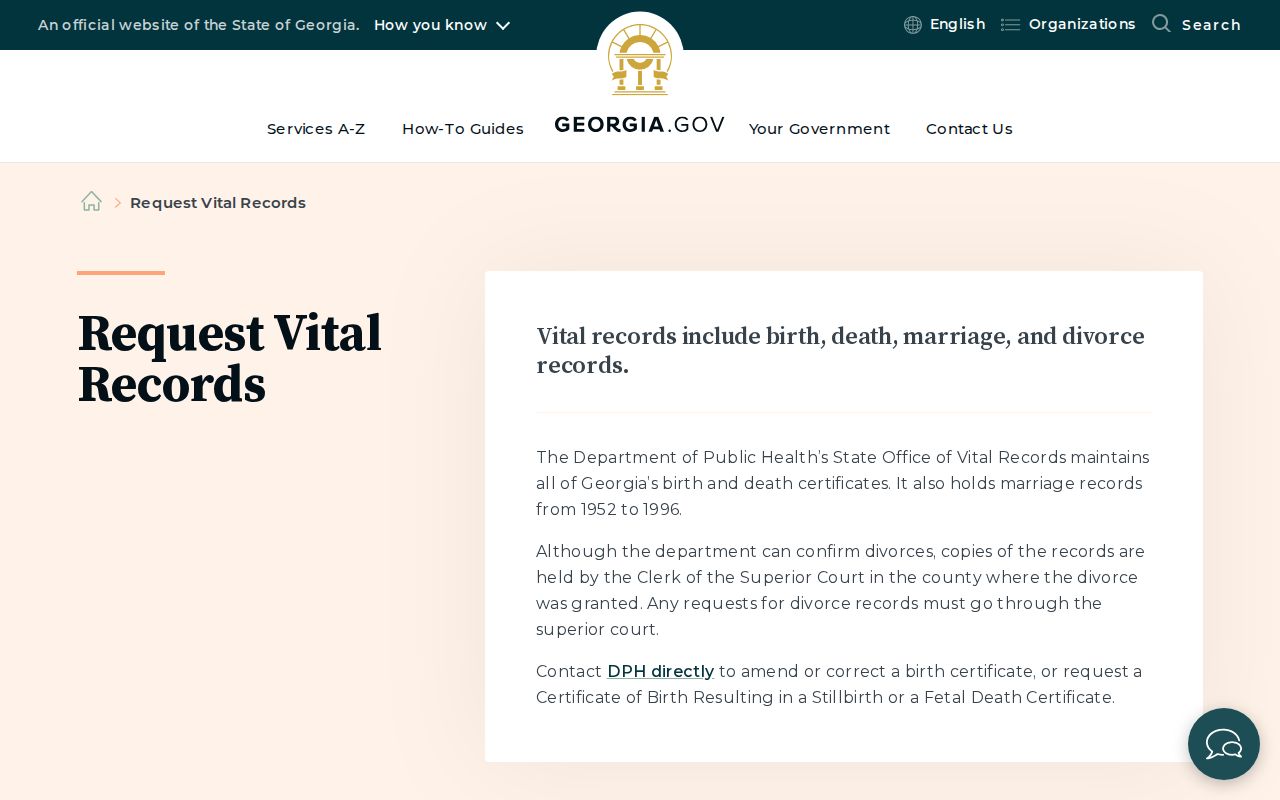
An obituary can identify survivors and life events, but it is best checked against a probate file, deed, cemetery record, or official vital source. Fulton Probate may hold estate representatives, heirs, wills, and notices in public portions of a file. Georgia DPH holds statewide births and deaths from January 1919, with birth access restricted to eligible applicants and death records subject to protected fields.
The Georgia vital-records overview distinguishes state and county routes. The successful capture below is a reminder that a request procedure, not an unrestricted name index, governs access.
Judge Johns Creek Previous Residents by Overlapping Evidence
A deed proves a recorded transfer, not occupancy. A parcel card identifies the assessed owner, not all household members. A directory lists whoever the publisher captured, while census schedules cover only released enumeration years. Obituaries and probate may close a life trail but can omit or simplify relationships. Previous residents become credible only when two or more dated sources align on identity, place, and time.
Record conflicts instead of forcing a neat answer. A common name, a corporate owner, an unlisted telephone, a rural route, or a missing volume can all produce ambiguity. The goal is a sourced house history with visible gaps, not a claim that every occupant has been found.
Lawful use. Research on previous residents belongs in house history, genealogy, estate work, and personal curiosity. Never use a record trail to track, harass, intimidate, or expose a living person.